

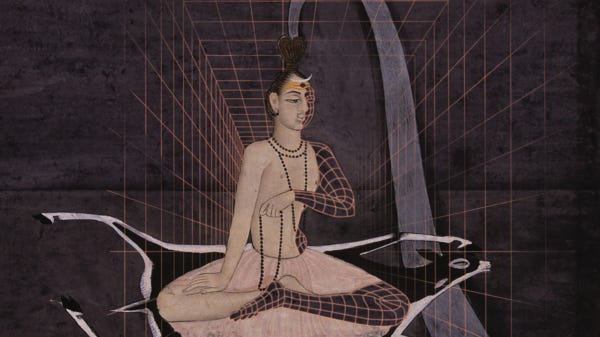
The Digital Dematerializing of Physical Reality
Everyday life is rapidly going virtual. In the mid-2000s, I suggested to a class of undergraduates that we would soon live in the internet. This claim elicited puzzled stares then, but now it’s a truism not worthy of a yawn because that future is closing in on us as we rapidly move our lives online. As fast as Moore’s Law allows, we are experiencing the digital dematerializing of physical reality. Crude single-player video games have morphed into massively multiplayer online role-playing games (MMORPGs). Apps are displacing shopping malls. Kindle books are displacing physical books. Music streaming has displaced downloads, which displaced CDs, which displaced tapes, and which displaced records. Now our cars are on the verge of driving themselves and the Internet of Things controls our homes and facilitates remote surgeries. It no longer seems like a surrealistic fantasy to think that we will soon move past the powerful consoles, VR headsets, and 3-D haptic touch devices of video gaming into a world that mimics the book and film Ready Player One.
This rapid virtualization of physical reality leads MIT computer scientist Rizwan Virk to suggest in his recent book, The Simulation Hypothesis, that we are living in a vast, immersive hyper-realistic 3D video game without knowing it. What Virk calls the “simulation point”1 is fast approaching when we slip over from virtual reality and augmented reality into simulated reality, at which point we will no longer be able to say what is real and what is virtual.
Powering the current fascination with virtual reality and augmented reality, which are distinguishable from everyday experience, is the drive toward computer simulation, which is a hyper-realistic Internet of Things and alternate worlds masking themselves as familiar common-sense reality. Driving this relentless expansion of simulated realities is the utopian hope that advancing technology will give humanity tools to generate hyper-realistic alternate universes where we can play out our noblest hopes—or perhaps our worst impulses. The progress of social media over the last two decades shows the potential of virtualizing technology to go either way. We human beings have always created virtual representations of reality from the earliest cave paintings, through poetry, and the many deities of our countless religions. But now we stand at a crossroads where our representational capacity is catapulting us into a transhuman or posthuman future. Will that future fulfill our deeper intuitions of what is good and wholesome or will it negate them?
“We human beings have always created virtual representations of reality from the earliest cave paintings, through poetry, and the many deities of our countless religions. But now we stand at a crossroads where our representational capacity is catapulting us into a transhuman or posthuman future. Will that future fulfill our deeper intuitions of what is good and wholesome or will it negate them?”
Many religious and philosophical traditions, such as those of India and of ancient Greece, have explored and put to spiritual use humanity’s capacity for mirroring and reshaping reality. In the Upaniṣads and in Neoplatonism, we encounter the divine reality as Brahman and the One (to hen), which dynamically and creatively pour out from their innermost depths multiple levels of increasingly denser consciousness reaching from the subtlest realm of first principles down to the atoms of matter. It is as if being, or the divine reality, seeks to display—or represent—its innermost self to itself through this cosmic act of self-representation. Just as being exudes mind, time, space, and matter through this magical process of self-creation, so we human beings exude fully formed dreamworlds composed of the same elements in infinite variety each night when we sleep. And we do this constantly when we are awake as well. From taking and giving style advice on Instagram through the creative power of language and the discoveries of the arts and sciences to the creation and redemption stories and human-like deities of the world’s many and varied religions, we are engaged in a never-ending series of simulations. As in our dreams, our simulations are often so realistic that we forget—or never realize—that they are creative fabrications.
This power is double-edged, as exemplified in the Hindu doctrine of māyā, which is both the world-creating power of the divine and the spell of illusion weaving the appearances that are taken as ultimate reality in the common-sense view of things. Māyā simultaneously displays the infinite attributes of the divine for our benefit while also veiling the fullness of the divine from our sight. So it is also with our own simulations, which we can develop as models of being that can help us navigate in and beyond māyā or that we can take as reality itself, thereby closing ourselves off to our own divine depths.
Interested in pilgrimaging inwards?
There is still time to join Meditation Resolution 2026: Embodied Philosophy’s free 5-day inner journey through the kośas. Learn more and register for free here.
Jan 1st - 5th 2025. Recordings available if you can’t make it live.
The Simulation Hypothesis
This twofold power of simulation, the creative and the veiling, turns up in a novel form in MIT computer scientist Rizwan Virk’s recent book, The Simulation Hypothesis, where he challenges our sense of everyday reality by asking if we live without knowing it in a hyper-realistic video game. Is our apparent physical reality, he asks, actually a 3D MMORPG—a massively multiplayer online role-playing game like Ultima Online or World of Warcraft, but fully immersive as in the world portrayed in the book and film Ready Player One?2 This is Virk’s way of addressing the trilemma posed in the famous Simulation Argument by Oxford philosopher Nick Bostrom.3 This argument presents three propositions or possibilities (only the third of which is the well-known Simulation Hypothesis). I would state this argument as follows:
Humanity becomes extinct before reaching capacity for simulation.
Advanced humanity collectively decides against simulations.
We live in a simulation.
This clever argument presents three decision points or alternatives on the road to the view that we live without knowing it in a massive video game. The Simulation Argument would be shown to be false if humanity (and, I would add, any other species or society) becomes extinct before becoming so technologically sophisticated that it could create a Ready Player One type simulation. (This is not the claim that no societies like this exist, but the claim that if there are none, then we do not now live in a simulation. We can’t really know if this alternative is true or false because we could be living right now in a simulation—what Bostrom calls an ancestor simulation—created by a some future posthuman—or nonhuman—society. The Simulation Argument would also be shown to be false if all advanced societies decide against creating simulated worlds where they can vary the possibilities experienced by their ancestors. But if neither of these first two propositions is the case, then we do live in a simulation because at least one society that reaches the technological level of creating convincing simulations doesn’t decide against doing so, with the result that we live in a simulation without knowing it.4
