


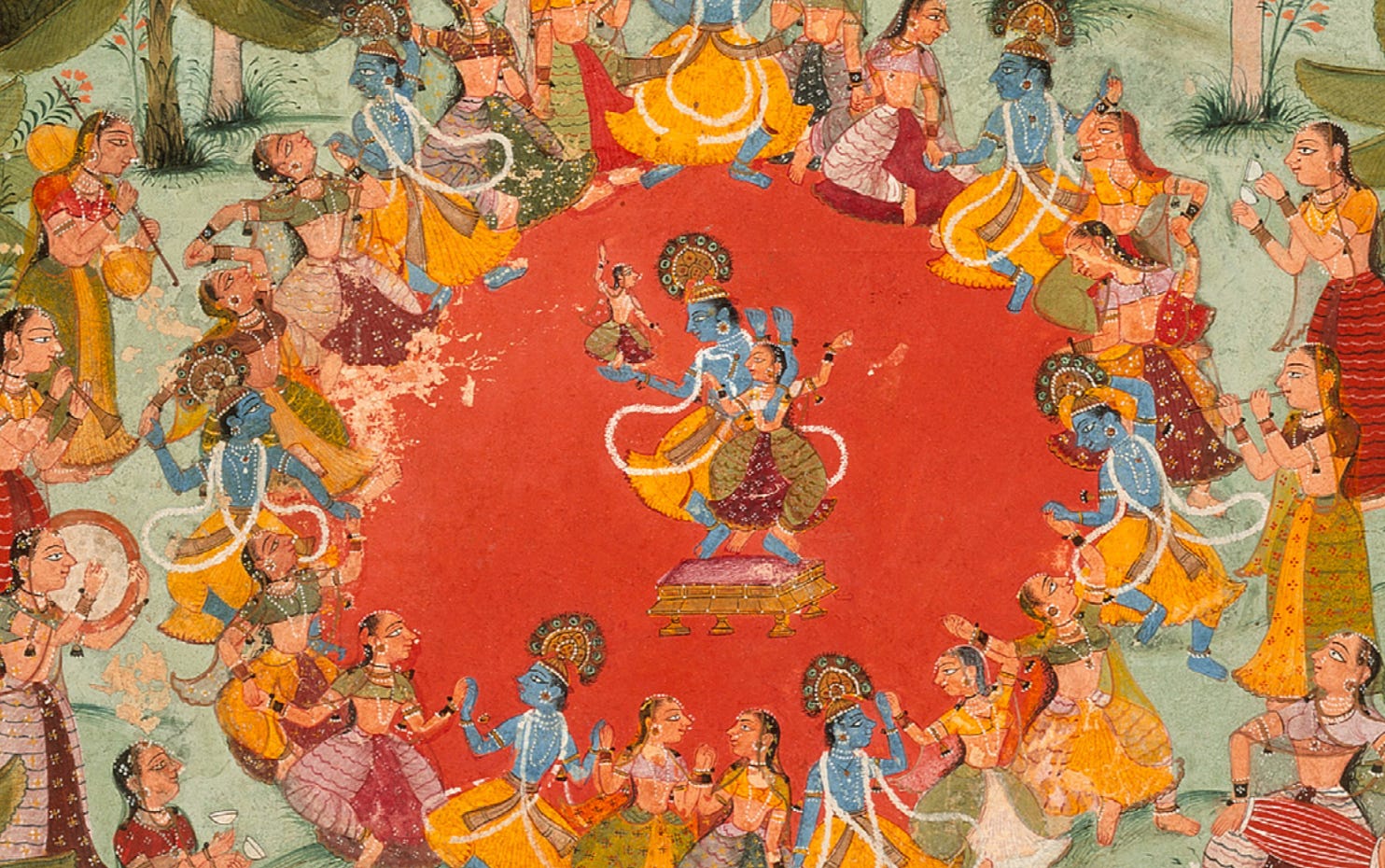
Līlā means, among other things, “sport,” “play” and “pastime.” Often translated as “divine play,” līlā signifies a number of theological and metaphysical ideas that pertain to the spontaneous playfulness of the absolute or supreme being.
There are at least two meanings of līlā relevant to the student of Indian traditions and śāstras. These meanings might be described as “dualistic” and “non-dualistic,” indicating how the supreme playfulness that is līlā is to be perceived and understood. In the dualistic schools of Hinduism, līlā denotes those activities that god participates in with his devotees. In the non-dualistic schools, līlā refers to the great dance of life, the exquisite sport of existence. Exploring both of these meanings will lead us into the larger question of ecology that guides this issue of Tarka.
