


By Ramesh Bjonnes
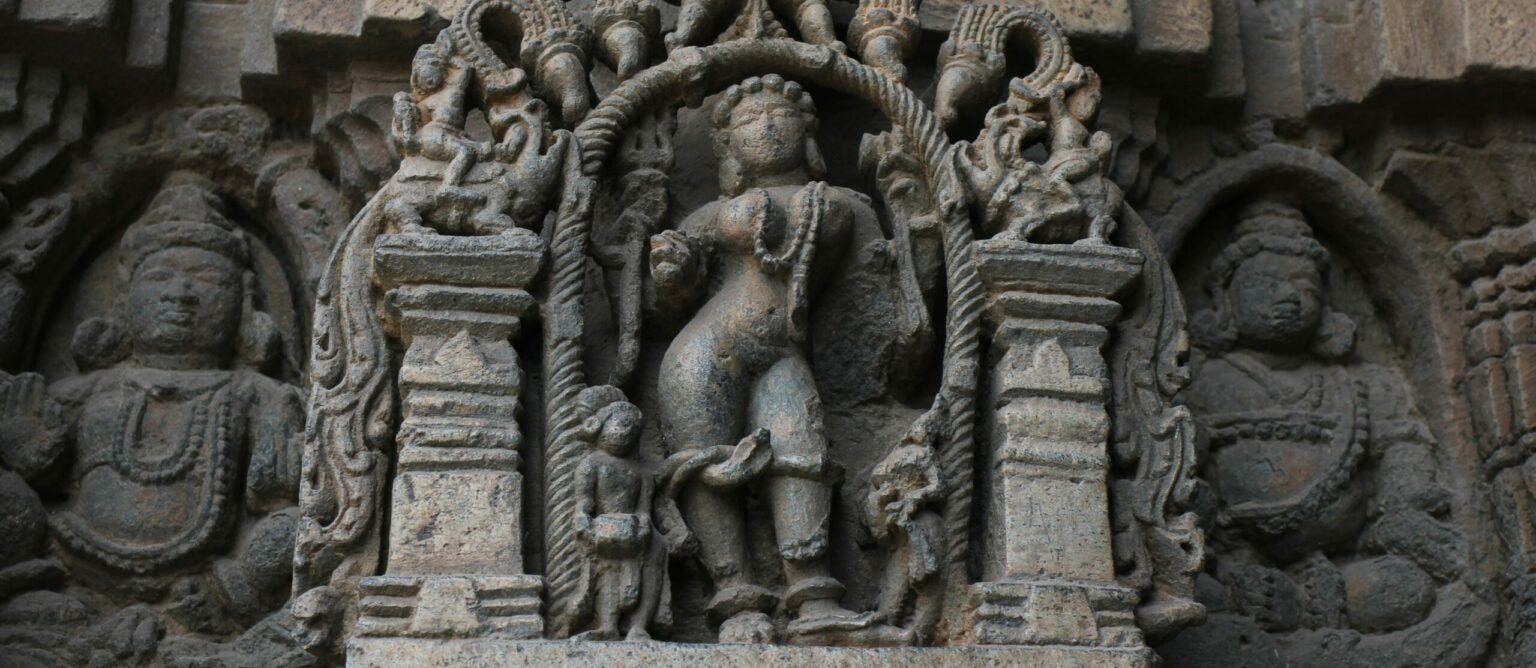
Tantra has received increasing interest among scholars and the public in recent years. Its historical origins and practices, however, are not so well understood. Sometimes misinterpreted or misrepresented, traditional Tantra is often veiled in a mist of popular myths. In the Indian imagination, Tantra is generally considered a dark art of magic, while in the West it is popularized as an expression of sacred sex. However, these simplifications and misconceptions are beginning to change.
In this article, drawing partly from an etic perspective, or an outsider’s view of a tradition, but mainly from an emic perspective, or an insider’s view of a tradition, I am highlighting the possibility that Tantra is much older than previously thought as well as the main source of yoga as practice and philosophy.
“In the Indian imagination, Tantra is generally considered a dark art of magic, while in the West it is popularized as an expression of sacred sex. However, these simplifications and misconceptions are beginning to change.”
Christopher Wallis, a contemporary practitioner and scholar of Kashmir Tantra, asks: Why would Tantra be of interest to modern people, Westerners in particular? “Millions of Westerners are today practicing something called yoga,” he writes, “a practice which, though much altered in form and context, can in fact be traced back to the Tantrik tradition.”¹ Then he explains in more detail how the yoga we practice today originated in Kashmir Tantra as well as in the Hatha Yoga tradition of the Middle Ages.
In this essay, we will look at another possibility, that the Tantric tradition is considerably older than 1000 years, and that both yoga and Tantra have emerged from the same spiritual roots, formed a similar philosophical trunk, and sprouted many important branches of embodied spirituality.
In 2011, when Georg Feuerstein revised his monumental book The Encyclopedia of Yoga, he decided to give the new edition an expanded focus. “My extensive coverage of material on Tantra,” he wrote in the new introduction, “which is nowadays wildly popular but also wildly misunderstood, warranted a new book title: The Encyclopedia of Yoga and Tantra.”2 In this revised version, he included those contemporary teachers who, according to him, have significantly contributed to contemporary yoga and Tantra practice. These teachers include Shrii Shrii Anandamurti, Paul Brunton, T.K.V. Desikachar, B.K.S. Iyengar, Swami Satyananda, and other teachers that are well known in the West—except perhaps for Anandamurti.
Prabhat Ranjan Sarkar (aka Anandamurti) was a social reformer, philosopher, poet, composer, economist, and Tantric guru. In the 1950s and 60s in India, he became well known as an activist speaking out against many economic and social ills, including the caste system. Following Tantric tradition, where caste is not recognized, and arguing that all people are part of one human family, Anandamurti advocated marriage across caste divisions and increased women’s independence. He also spoke out against various forms of economic exploitation. He supported a post-capitalist economy based on ecology, cooperatives, bioregional development, and neo-humanism—the love for and inherent rights of all beings. His blend of Tantric spirituality and progressive ideas attracted the intellectuals and the middle class.
However, like many revolutionary and unorthodox thinkers, Anandamurti was persecuted and finally jailed during Indira Gandhi’s near-absolute control of the Indian government in the 1970s. This period culminated with her authoritarian state of emergency from 1975-1977.3 After eight years in confinement, during which he miraculously fasted for five years in protest, he was, in 1978, “found innocent on all counts and released. He wrote over 5000 songs and more than 250 books.”4 Anandamurti also authored Ananda Sutram, a philosophical masterpiece on Tantric cosmology, philosophy, and practice. Hailed by some as perhaps “the fullest synthesis” of any book on Tantra, the text follows in the footsteps of other Tantric gems, such as Kshemaraja’s Pratyabhijnahrdayam and Abhinavagupta’s Tantraloka.
Tantric History: An Emic Perspective
Perhaps the most compelling etic case for Tantra starting at the dawn of human civilization, as Anandamurti and other emic Indian sources maintain, has been made by art historian Thomas McEvilley. His essay An Archeology of Yoga represents one of the most formidable writings on the connection between Tantra and shamanism, before and during the Indus Valley Civilization (4500-2000 B.C.E.). The archaeological evidence is revealed in the various excavated seals depicting a yogi seated in an advanced yoga asana posture on an elevated platform—the famous and much-debated Pashupatinath seal.5
McEvilley writes that the purpose of his essay is to answer the question: Was yoga practiced in the Indus Valley 5000 plus years ago? His well-documented and affirmative answer: Yes, it was. However, the current academic, etic consensus is that yoga evolved in the Magadha region among ascetic yogis in the sramana movement on the fringes of Vedic society at the time of the Buddha about 500 years before Christ.6 Other Indologists and historians supporting McEvilley’s view are authors on Tantra, such as Alain Danielou, Prasad Lalan Singh, N. N. Bhattacharya, M.R. Sakhare, and R. P. Chanda, all pointing to ancient Tantric Shaivism as the source of yoga, independent of the Vedic tradition. As more archaeological evidence, R. P. Chanda draws our attention to another figure found in the Indus Valley indicating an ancient non-Vedic origin of Tantric yoga. The statuette is a bust of someone “in the posture of a Yogin or one engaged in practicing concentration.”7
From within the tradition itself, from various untranslated Tantric scriptures, from the Puranas, as well as from Anandamurti, who presents Shivology, a revisionary history, we are introduced to the “historical Sadashiva.” In these writings, he claims that Shiva introduced yogic metaphysics and meditative practices in the Himalayan and North Indian regions but thousands of years earlier. Thousands of years later, this culture would influence India’s many sacred texts, such as the four Vedas, the Upanishads, the Samkhya, Patanjali’s Yoga sutras. Their Āgama and Nigama Tantra then reemerge in various Tantric texts during the early common era, including the now popular Vijnana Bhairava Tantra text.8
According to Puranic sources as described in books by Alian Danielou and others, as well as the writings of Anandamurti, the first Vedic Aryans migrated into India at that time (5000-4000 BCE). From the comingling of these cultures evolved the many references to ascetics, mantra rituals, and Rudra as Shiva in the early Vedic scriptures. The claim of a historical Shiva is still open for etic scrutiny. But the emic assertion in the Puranas and by Ananadmurti of an early Vedic Aryan migration into India has recently been proven by geneticists supporting the Out of Africa Theory. This research places the Aryan arrival in India between 5000-2000 B.C.E. Modern genetic science has, despite contrary claims by Hindu nationalists in the Hindutva movement, compellingly evidenced a long Aryan migration route into India rather than a sudden violent invasion as previously held by Indologists.9 10
Tantra as the Essence of Yoga
According to Anandamurti, Tantra is the essence of yogic transformation, irrespective of style. The word itself has had many but interrelated meanings in various texts, from the Vedas to the Tantras: loom, essence, system, practice, or science. The spiritual meaning of the word, according to Anandamurti, is as follows:
“The scriptural definition of Tantra is tam jadyat tarayet yastu sah tantrah parakiirtitah [Tantra is that which liberates a person from the bondage of staticity]. Tam is the acoustic root of staticity. Tantra has another meaning as well. The Sanskrit root verb tan means to expand. So, the practical process that leads to one’s expansion and consequent emancipation is called Tantra. Thus sadhana [spiritual practice] and Tantra are inseparable.”11
The worldly goal of Tantra is to lead a dynamic and balanced life of service (seva) and to struggle against oppression and injustice in society. Anandamurti’s definition of a Tantric practitioner is both broad and specific: any “person who, irrespective of caste, creed or religion, aspires for spiritual expansion…”. From this emic position, Tantra is “neither a religion nor an ism” but rather a “fundamental spiritual science,” a path when diligently practiced ultimately reveals the goal of all yoga, of all mysticism: the universal realization of divine union.12 At the same time, Tantra also refers to the distinct tradition initiated by Shiva, the tradition which later became known as Shaivism and which in the Middle Ages blossomed through various Tantric texts and teachers in Kashmir, Bengal, South India, China, Indonesia, and elsewhere.
“From this emic position, Tantra is ‘neither a religion nor an ism’ but rather a ‘fundamental spiritual science,’ a path when diligently practiced ultimately reveals the goal of all yoga, of all mysticism: the universal realization of divine union.”
Alain Danielou points out how the ancient oral teachings of Shiva in the Agamas influenced Indian culture, in general, and yoga in particular when they eventually were written down:
“The most important of these texts are called the Agamas (traditions) and Tantras (rules and rites). To these must be added the Puranas (ancient chronicles), which deal with mythology and history, and philosophical and technical works about cosmology (Samkhya), yoga, linguistics (Vyakarana), astronomy (Jyotisha), medicine (Ayurveda), mathematics (Ganita), and so on—a vast literature, which despite having been transcribed in a relatively recent era, nevertheless has sources in distant antiquity.”13
The philosophies and spiritual practices of yoga and Tantra, Danielou writes, in addition to the texts and the commentaries of the Vedas, the Brahma Sutras, and the Upanishads, as well as those of Buddhism and Jainism, were “only transcribed during the great age of liberalism and civilization which characterizes the Shaiva revival.”14 This idea that certain parts of the great spiritual texts of India are a renewal and elaboration upon teachings originating in ancient Shaivism, represents an alternative view from current etic scholarship in the West.
“This idea that certain parts of the great spiritual texts of India are a renewal and elaboration upon teachings originating in ancient Shaivism, represents an alternative view from current etic scholarship in the West.”
While Christopher Wallis and other Tantric scholars have noted few, if any, Tantric elements in the Yoga Sutras, or in earlier yoga texts, Alan Finger, of ISHTA Yoga, writes in the introduction to his book Tantra of the Yoga Sutras: “Between my own practice, the instructions from my teachers, and my learning about the Sutras, I developed the view that Patanjali was a Tantra Yoga practitioner writing about the way yoga actually works from a scientific point of view.”15 For Anandamurti, the word Tantra is used much the same way the word yoga is used today—to signify all the “scientific” practices combining meditation and postures originating in ancient India. Despite multiple modifications and additions over time, since these practices began with Shiva and the Shaiva Tantric tradition, they are, from this perspective, in essence, all Tantric. Swami Satyananda, the founder of the Bihar School of Yoga, echoes this view by writing that “yoga is part of the more encompassing system of Tantra. Yoga as it is widely known and practiced, the yoga that has been practiced in India for thousands of years, comes directly from Tantra.”16
Tantric Meditation Practice
The historical and practical context of the teachings expressed above were not yet known to me when I began practicing yoga in Norway in 1972, a couple of decades before the yoga studio’s proliferation and the slip-resistant yoga mat. Unlike today, however, when most people learn yoga as a form of postures, at that time, the main entryway into the world of yoga was through meditation. That is also the traditional way. The goal of spiritual yoga, and thus Tantra, is not just a healthier, slimmer, more flexible body but inner freedom, liberation, peace, and ultimately enlightenment, mukti or moksa. These spiritual goals were confirmed in a recent anthropological study among modern Indian ascetics or sadhus. When asked why they were practicing postures, they invariably answered: to prepare the body for meditation. Not surprisingly, the Hatha Yoga Pradipika, an essential textbook on yoga from the 15th century, begins with this statement: “Salutations to the primeval Lord, who taught the Hathayoga-vidya, which is as a stairway for those who wish to attain the lofty Raja Yoga.”17
The primeval Lord refers to Shiva, while Raja Yoga, from the emic perspective, refers to various Tantric meditation techniques. Records in the Puranas state that Shiva was the King of Yoga, the originator of Tantric practices, even yogic medicine. From Anandamurti, we learn that Shiva was the inventor of Raja Yoga, the yoga of meditation exercises, including pranayama (breath control), pratyahara (sense withdrawal), dharana (concentration), and dhyana (flow meditation), thousands of years before Patanjali consolidated these teachings in the Yoga Sutras.
In the words of Indologist Justin M. Hewitson: “While Siva Tantra’s origin is obscured by the complex religious transformations that preceded its founder’s advent seven thousand years ago, Siva’s pervasive imprint remains visible in India’s surviving oral tradition and in Vedic and Buddhist sects.”18
Tantric mantra meditation—which is signified by a complex set of visualization-, sense- withdrawal-, breathing-, concentration-, and ideation-techniques—suited my introverted nature. As a young writer who loved to be alone in the Norwegian nature’s peaceful, ferocious, and awe-inspiring splendor, meditation became a natural pastime. I started practicing when a mantra just popped into my head while meditating with a group of friends practicing Maharishi Mahesh’s Transcendental Meditation, more popularly known as T.M.
A few months after that, I was introduced to more of Tantra’s inner mysteries when I received diksha, or initiation, one of the unique characteristics of Tantric yoga. Another characteristic is that the process of meditation is to be kept secret to preserve the authenticity of the teachings, which is another reason why textual study conveys an incomplete picture of Tantric practices. To my great surprise, the mantra I received during diksha from a charismatic, orange-clad kapalika, a wandering monk, was nearly identical to the mantra that had “popped into my head.” I learned that Anandamurti had spiritually energized the sacred mantra since he was a Mahakaula, someone who could impart the power of shakti in a mantra and thus help raise the kundalini of other yogis. When I asked the kapalika how all this was possible, he at first shrugged it off and replied: “Tantra is a mysterious path.” When I challenged him further, he said that the “intuitional science” of Tantra is very complex and sophisticated, and that I would learn it through practice, not from books. I gradually became accustomed to the new mantra the kapalika taught me, and I practiced twice a day as instructed.
Explore the Print and/or Digital Issues of Tarka Journal in our online shop.

In the late 70s, I lived in an ashram in Denmark where I learned an elaborate system of six Tantric meditation techniques incorporating practices described, but not elaborated upon or taught, by Patanjali in the Yoga Sutras: pranayama (breath control), pratyahara (sense withdrawal), dharana (concentration), and dhyana (flow meditation). These techniques incorporate mindfulness, the most common form of meditation practiced today, while adding more complex elements involving cakra-visualizations, physical and mental concentration points, and alternate nostril breathing combined with cakra-concentration and mantra recitation. Anandamurti termed these specific practices Sahaj yoga, but he referred to the overall path as Tantra. These lessons are also described as Shiva Yoga by Indologist Alain Danielou. They have been taught in initiation ceremonies since the time of Shiva and have been practiced in various forms by ascetic yogis from multiple sects. These meditation techniques are described by many names depending on teacher or lineage—including Kundalini Yoga, Laya Yoga, Ashtanga Yoga, Raja Yoga, etc.—and they are not for slacker yogis. They require time and dedication to practice. When we add the historical perspective of an entire yogic subculture dedicated to these embodied techniques for thousands of years, it is fair to say that yogis in the West are just starting to embark upon the sophisticated path of spiritual introspection the Tantric way.
Most Western yogis are familiar with mindfulness meditation, the practice of watching the breath, thoughts, and feelings without attachment. Robert Wright, bestselling author of Why Buddhism is True, a book about mindfulness meditation, explains that there is also another form of meditation, namely concentration meditation. “Sometimes, if sustained long enough,” he writes, “it can bring powerful feelings of bliss and ecstasy. And I mean powerful feelings of bliss or ecstasy.”19
Mindfulness and concentration (dharana) are both central to Tantric meditation practice. Mindfulness is practiced at all levels of Tantric meditation, from the time you begin, and the mind is still somewhat restless, until you have a feeling of concentrated flow, and further until you have a deep and sustained bliss experience. Why? Because, without mindfulness, the detached, witnessing, inner observer part of the mind can quickly be overshadowed by the ego’s sense of pride and judgment. And before you know it, the deep focus and bliss are gone. However, lingering feelings of clarity and bliss may remain after such meditations, sometimes for days. If there is near-perfect mindfulness coupled with a stillness of the mind, the observer recedes. Without mental interpretation (ego), a flow of ecstasy ensues, culminating with samadhi—union with Divine Consciousness (Shiva), in the Tantric language, or a deep stillness beyond the fluctuations of the mind, according to Patanjali. Tantra also claims it is possible to attain liberation (mukti) while alive. The term jivanmukta is accredited to such a living saint or liberated being.
In this context, Alan Finger can rightly claim that Patanjali prescribed Tantra Yoga, Anandamurti can affirm that Tantra and yoga are “basically the same,” and that both the so-called Hindu and Buddhist Tantra traditions originated from the same ancient roots in Shaivism. Similarly, Shyam Sundar Goswami may write that in both “Waidika yoga and Tantrika yoga the eight stages of [Patanjali’s] practice have been accepted.”20 However, none of the practices I have superficially described above are explained in any detail in Patanjali’s Yoga Sutras. Within the tradition, for thousands of years, the minute features of these teachings have been secretly taught during oral transmissions, during face-to-face initiation ceremonies, by an accomplished teacher or guru. That ancient tradition is still ongoing, but it has yet to manifest itself in the modern yoga studio culture for lack of qualified teachers.
Tantra as Philosophy and Worldview
From within the tradition itself, it is said that the practice of Shiva worship, Tantric meditation, and yoga is one of the world’s oldest and most influential wisdom traditions. “This oral route,” writes Tantric scholar Justin M. Hewitson, “was mostly ignored by etic colonial scholars who preserved their ‘objectivity’ by elevating textual studies over ethnographic data.”21 Despite the availability of Tantric texts and the proliferation of Zoom accounts, traditional Tantric meditation and asana practices are still transmitted orally today—person to person, from teacher to student.
Despite the many forms of Tantra—from the pious, idol-worshiping Vaishnav Tantra to the transgressive practices of Aghora Tantra—there is underneath it all a universal Tantra, a theistic, nondualistic (but also dualistic), and dharma-centered philosophy and practice originating with Shiva. In Hindu culture and the historical narrative of the Puranas, Shiva is considered the Adi Yogi, the first yogi, even the inventor of Ayurvedic medicine. David Crow, a well-known Ayurvedic teacher, writes that his Nepalese mentor referred to Shiva as “The Father of Ayurvedic medicine.”22 From this emic, or insider’s perspective, what emerged in the Middle Ages as the textual and thus now the accepted academic evidence of the origin of Tantra, is a continuation of a much older oral tradition that began in ancient times with Shiva, the archetype of yogic self-transformation. It is this prehistoric Tantric tradition Anandamurti has systematized, reignited, and reinvented for modernity.
It has been argued by some scholars that every contemporary yogi, whether meditating or not, practices a form of Tantra. There is much truth in that, but it is also important to note that many, if not most, yoga postures practiced in yoga studios today are hardly more than 100 years old. Some are only a few years or decades old. They were first introduced by Tirumalai Krishnamacharya, the so-called father of modern posture yoga, to his legendary disciples B. K. S. Iyengar, Pattabhi Jois, and his son T. K. V. Desikachar.23 They in turn developed their own styles and trained yet other teachers who again created new types of posture yoga, well-known teachers such as Seane Corn, John Friend, Judith Lasater, Rodney Yee, and many others. Meditation, a fundamental practice of traditional Tantra, and emphasized and still practiced in conjunction with traditional Hatha Yoga by contemporary sadhus, is not central to modern posture yoga. In addition, the Tantric meditation and posture yoga techniques practiced 2000 years ago are essentially the same today. Traditional Tantra, which values spiritual quality and purpose over physical therapy and flair of style, has not undergone the same radical changes as the yoga practiced in the modern postural yoga movement.24
“It has been argued by some scholars that every contemporary yogi, whether meditating or not, practices a form of Tantra. There is much truth in that, but it is also important to note that many, if not most, yoga postures practiced in yoga studios today are hardly more than 100 years old. Some are only a few years or decades old.”
Nondualistic Tantra is philosophically different from the two other primary schools of Indian yoga, the Classical Yoga of Patanjali (also known as Ashtanga Yoga) and the Advaita Vedanta of Shankaracharya. As a so-called dualist, Patanjali believed that the spiritual realm was separate from our worldly existence. On the other hand, both nondualistic Tantra and Vedanta subscribe to the Oneness of existence. However, where the Tantrics see the world as Divine, the Vedantists see it as an illusion.25
So, what is the essence of the nondualistic Tantric worldview, as it has evolved by great teachers from Shiva to Abhinavagupta and Kshemaraja in the Middle Ages to the contemporary Anandamurti? That worldview states unequivocally that Divinity is everywhere and that all humans can realize sacredness anywhere. This holistic cosmology of Tantra holds that this world and all its living beings are created from the union of Shiva (Cosmic Consciousness) with Shakti (Cosmic Energy/Matter), and that this union dissolves in nondual Brahma. (Cit or Samvit in Kashmir Tantra). Anandamurti explains this fundamental cosmological insight in his Ananda Sutram text with the following sutra: Shivashaktyátmakam Brahma, which simply means that Shiva and Shakti are inherent fusions within the cosmic essence of nondual Brahma. It is this cosmic ontology and the practical teachings of Tantra which makes the tradition so appealing to contemporary spiritual seekers.26 Indeed, several prominent yoga teachers quoted in Yoga Journal over a decade ago predicted that Tantra would be the “next step in [our] spiritual evolution.”27 These teachers have indeed been prophetic. A sincere inquiry into the philosophy and practices of Tantra has been steadily increasing in the worldwide yoga community since Isaacs’ article was published.
With the growing interest in this ancient spiritual tradition, many of the misconceptions have steadily decreased. One of these misconceptions is that Tantra is only about 1000 years old and that it has very little to do with the much older yogic tradition. From the emic perspective presented here, however, we have learned that Tantra may be the root source of all the yogic paths and philosophies that evolved from a rich oral tradition within Shaivism and outside Vedic society at the dawn of Indian civilization. We have also learned that the practices Patanjali only alludes to in the Yoga Sutras are inherently Tantric and have been imparted outside the text in oral initiation (diksha) ceremonies for several thousand years before the composition of the Yoga Sutras. Thus, Tantra may not only be the source of all yoga—Tantra is yoga, as Anandamurti and other teachers maintain, and yoga is Tantra.
Thank you for reading!
Interested in deepening your enquiry into the Tantric Traditions?
Then you may be interested in our year-long programme into the non-dual Śākta–Śaiva traditions, Sādhana School. Combining theory and practice, the new term of Sādhana School starts late October 2025. Find out more below.
Footnotes
1Christopher Wallis. Tantra Illuminated: The Philosophy, History, And Practice of a Timeless Tradition. Mattamayura Press (2013).
2George Feuerstein. The Encyclopedia of Yoga and Tantra. Boulder, CO: Shambala (2011).
3Vimala Schneider. The Politics of Prejudice. Flushing, NY: Ananda Marga Publications (1983).
4Feuerstein (2018: 28).
5Thomas McEvilley. An Archeology of Yoga, essay in Anthropology and Aesthetics. Chicago, IL: University of Chicago Press (1981).
6James Mallinson and Mark Singleton. Roots of Yoga. New York, NY: Penguin Classics (2017: xiv).
7N. N. Bhattacharya. The History of the Tantric Religion. New Delhi, India: Manohar Publishers (1999).
8Shrii Shrii Anandamurti. Namah Shivaya Shantaya. Calcutta, India: Ananda Marga Publications (1985).
9Spencer Wells. The Journey of Man: A Genetic Odyssey. Princeton, NJ: Princeton University Press (2003).
10Tony Joseph. Early Indians: The Story of Our Ancestors and Where We Came From. New Delhi, India: Juggernaut Publications (2018).
11Shrii Shrii Anandamurti. Discourses on Tantra, Volume 1. Calcutta, India: Ananda Marga Publications (1993).
12Ibid.
13Alain Danielou, While the Gods Play: Shaiva Oracles and Predictions on the Cycles of History and the Destiny of Mankind.
14Ibid.
15Alan Finger and Wendy Newton, Tantra of the Yoga Sutras, Shambhala, 2018.
16Swami Satyananda Saraswati, A Systematic Course in the Ancient Tantric Techniques of Yoga and Kriya, Yoga Publications Trust, 1981.
17Daniela Bevilacqua, Let the Sadhus Talk: Ascetic Understanding of Hatha Yoga and Yogasanas, research paper, SOAS University, 2019.
18Justin M. Hewitson, Siva Tantra Rediscovered, published in Routes, Routes and a New Awakening, edited by Ananta Kumar Giri, Palgrave MacMillan, 2021.
19Robert Wright, Why Buddhism Is True: The Science and Philosophy of Meditation and Enlightenment, Simon and Schuster, 2017.
20Shyam Sundar Goswami, Layayoga: The Definitive Guide to the Chakras and Kundalini, Inner Traditions, 1991.
21Justin M. Hewitson, Siva Tantra Rediscovered, published in Routes, Routes and a New Awakening, edited by Ananta Kumar Giri, Palgrave MacMillan, 2021.
22David Crow, In Search of the Medicine Buddha: A Himalayan Journey, Tarcher, 2000.
23Mark Singleton, Yoga Body: The Origins of Modern Posture Yoga, Oxford University Press, 2010.
24Ramesh Bjonnes, A Brief History of Yoga: From Its Tantric Roots to the Modern Yoga Studio, Innerworld, 2018.
25Ramesh Bjonnes, Sacred Body, Sacred Spirit: A Personal Guide to the Practice and Philosophy of Yoga and Tantra, Innerworld, 2012.
26Anandamitra Avadhutika, The Spiritual Philosophy of Shrii Shrii Anandamurti: A Commentary on Ananda Sutram, Ananda Marga Publications, 2002.
27Nora Isaacs, Tantra Rising, Yoga Journal, August, 2007.

Which element of Tantra, when seen from an insider perspective, challenges the way we typically approach spirituality or embodiment?
The holistic, inclusive orientation of Tantra presents its perspective on embodiment as both a challenge and an invitation to rethink how spirituality is practiced and understood, highlighting that transcendence comes not from rejection but through embracing and transcending all experiences fully, and thus living and "digesting" every aspect of human existence. Nothing is an obstacle to liberation in Tantra--bliss or pain, both are gateways to transcendence. However, traditional Tantra is not hedonism; it is ultimately about transforming kama into prema--desire into love.