

By Tracy Sayuki Tiemeier
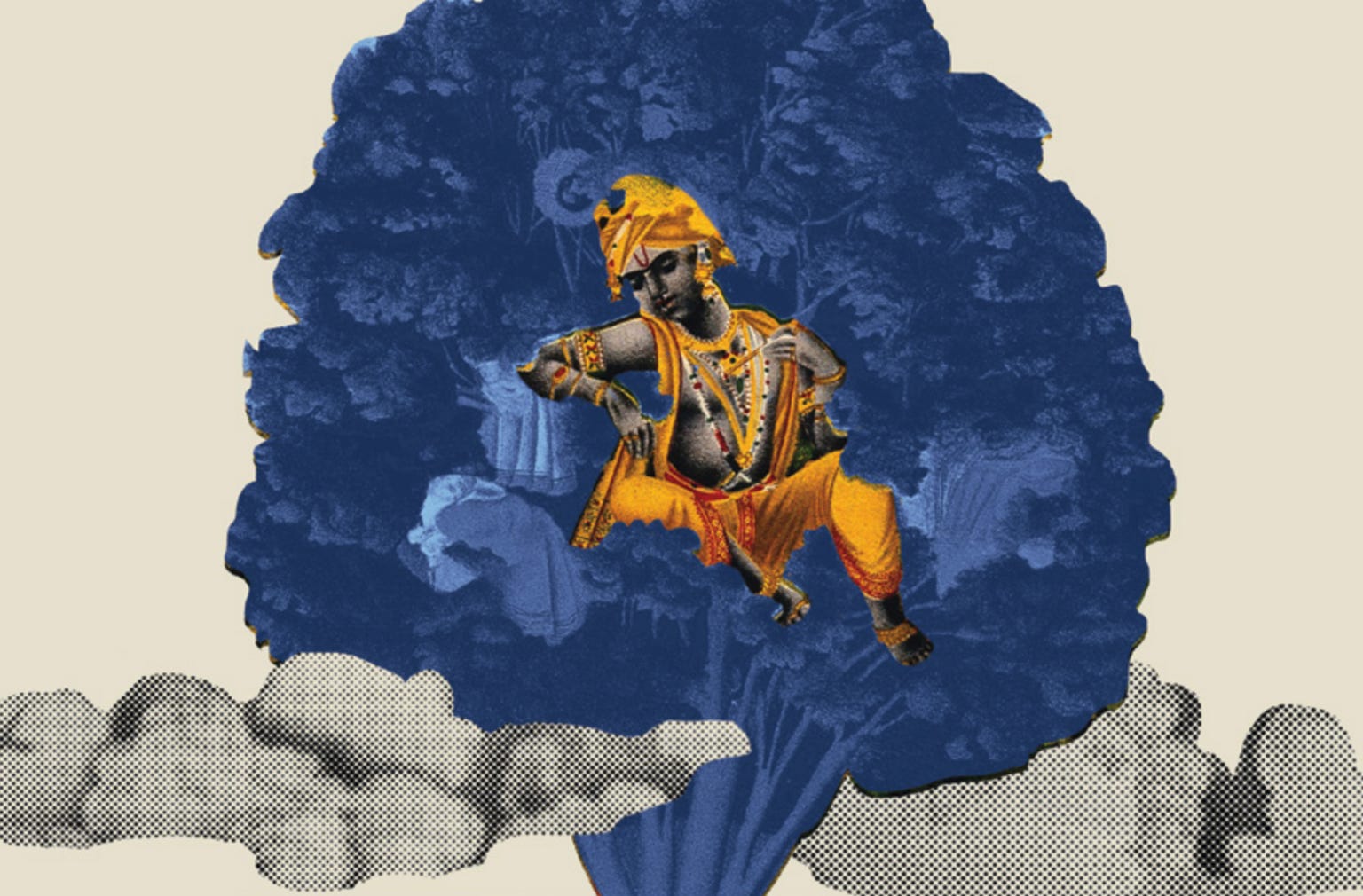
Young Kṛṣṇa among the cowherds is an iconic image central to North Indian Vaiṣṇava traditions of bhakti. Although Tamil South Indian literature and traditions developed and changed some of the elements, the basic characteristics of the narratives remained. For example, stories concerning Kṛṣṇa’s love-play with the gopīs (cowherd maidens) are paramount for understanding Southern Kṛṣṇa bhakti, where the union and separation of the gopīs with and from Kṛṣṇa become the primary material for understanding the devotees’ own union and separation with the divine.
The ancient Tamil worldview can be seen in classical Tamil poetry (called caṅkam), which spans nine hundred years (from the third century B.C.E. to the sixth century C.E.) The poetry is divided into two categories, akam (poetry of the “inside,” dealing with the inner world of emotions) and puṟam (poetry of the “outside,” dealing with the outer world of war, politics, the socius, and even religion).1
