

This article is taken from Tarka Volume 3, On Ecology.
Volume 9, On Power, will be released later this year.
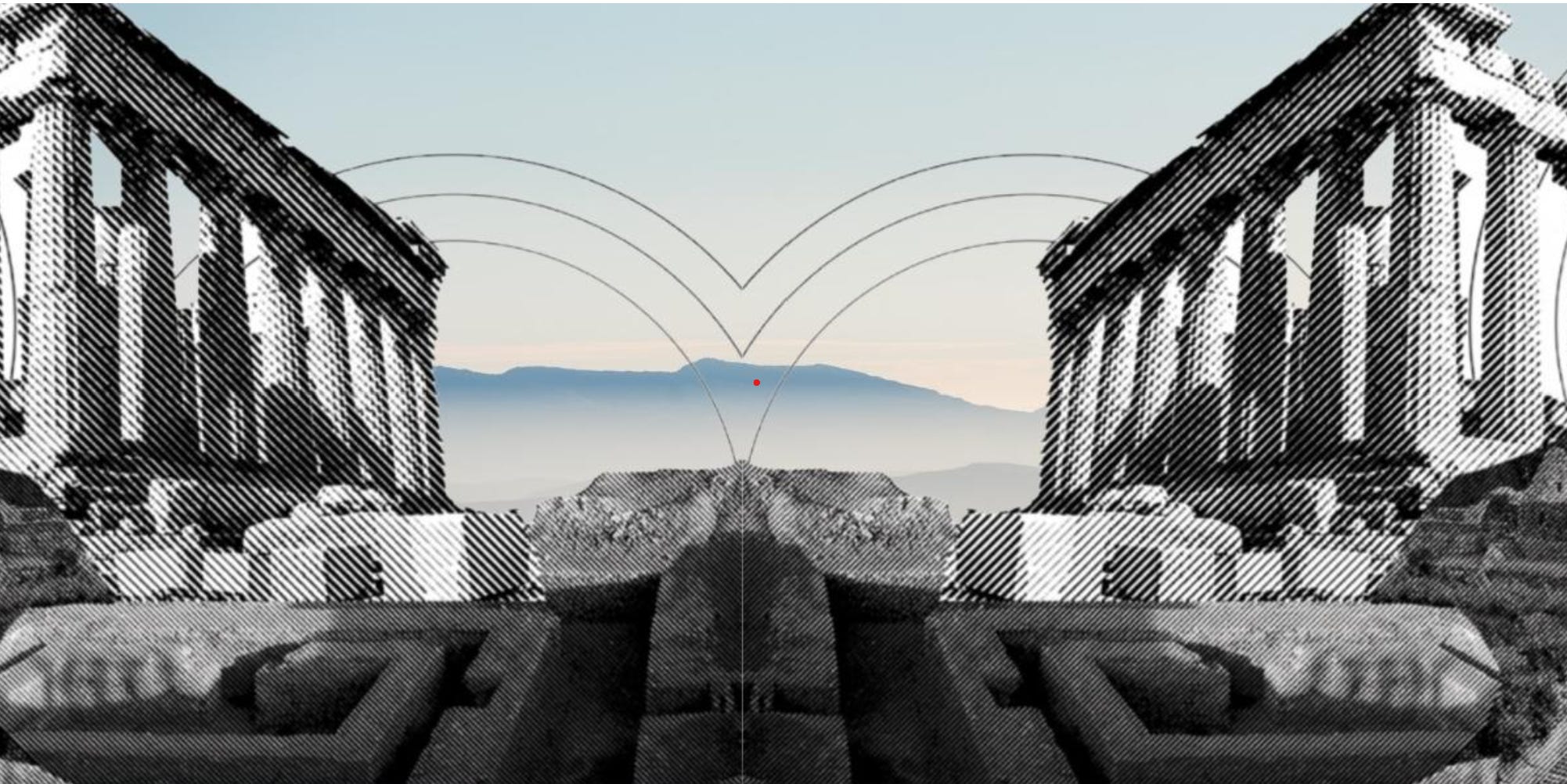
Historical cities offer insights relevant to current efforts to regenerate an ecologically healthy Earth. The following essay explores the bonds between three soil communities and their cities – Uruk, Athens, and Machu Picchu. These cities illustrate three different relationships to soil – as a Parasite on Soil, as a Disease of Soil, or as a Soil Maker. Based on this research, I urge us to re-member our relation to the Earth by making our habitats soil-generators.
The Seeding of Cities
Six thousand years ago ancient Uruk formed part of a network of settlements that for the first time made urban life possible. Located along the Euphrates River just north of the present-day Persian Gulf, Uruk was the chief cultural center of Sumer and its foremost religious center. In the sacred precinct of the fertility Goddess Ishtar stood her Ziggurat, representing the Cosmic Mountain rising out of the primal chaos at the moment of creation. Her Temple was never surpassed in Sumer in size and richness of architectural details. The terraces of the stepped altar regularly held the vegetable offerings from Uruk’s gardens and date groves, transforming the tiered Ziggurat into a series of “green roofs.”
The duty of the King of Uruk was to embellish and maintain his city. City walls dominated Sumerian urban architecture. Gateways displayed the city’s wealth, impressed visitors, and served as civic centers. To enhance these, King Gilgamesh defies an ancient sacred prohibition against felling cedars growing in the mountains north of the city. He and his companion, Enkidu, kill the protective forest monster. They clear-cut the cedars to construct a magnificent new gate in the city ramparts.
Gilgamesh’s actions anger the supreme Gods, who inflict flood, famine, and sorrow on the inhabitants of Uruk. The Gods also curse Enkidu, who embodies what is ‘wild and untamed’ in the human. He personifies what we recognize today as our alignment with natural systems. Enkidu dies a painful death. Horrified at the possibility of his own death, Gilgamesh seeks immortality. After fruitless wanderings, the King realizes that he can only achieve eternal life through the longevity of what he builds to sustain Uruk. At the end of the tale, he concentrates on maintaining the city walls, canals, gardens, and temple precincts. He concentrates on, what we would describe as sustaining the city’s relation to its ecology…to its place on the Earth.
Modern ecology interprets this nearly five-thousand-year-old tale for us. Clear cutting mountain forests destroys wild nature. It leads to increased water run-off and unexpected, often destructive flooding. Torrential inundations in turn drown crops in the surrounding low-lying lands, creating famine. Cities face the likelihood of demise when their food supply ends. Their citizens have dire choices: starving to death, subjugating foreign territories to supply them with food, being conquered by enemies, or abandoning their city.
Ecological design also illuminates the Gilgamesh legend. Human communities form life-dependent relations with the natural systems of their locality. Through trade, these essential bonds extend to the ecologies of far-distant lands. Sometimes, as in the case of Uruk, cities develop life-sustaining connections with remote territories whose natural bounty they violently seize. The Gilgamesh story, the oldest written record we have, warns us that in order for urban complexes to achieve longevity, city constructors cannot ignore these ecological connections. Instead, urban builders need to develop building practices that treat cities, their surrounding regions, the lands of their trading partners, and appropriated lands as one integrated organism.
History records that the rulers of Sumerian cities did learn to co-exist for an extraordinarily long time within the Euphrates-Tigris river system, just as the story of Gilgamesh suggests. They achieved an urban energetics giving their cities a longevity the Greek polis never obtained. Ultimately, the soils of Sumerian cities lost their viability but only after these settlements survived for nearly four millennia. Can our cities achieve a comparably long life?
Cities Integral to Soil Communities
Contrary to modern perceptions, human settlements are not separate from the natural systems they penetrate or from their neighboring countrysides. Instead, cities form vital relationships within their regional soil communities. British historian Edward Hyams describes the basic characteristics of soil communities and the position of cities within them in his extraordinary Soil & Civilization, a historical study of humanity’s place within the Earth’s planetary ecology. Hyams reminds us that soil is not a dead inert resource but an organism. The rock, humus, bacteria, atmosphere, water, fungi, and earthworms that comprise soil constitute a biological, organic, living community. Humans intrude into these communities by the way we create cities.
Hyams organizes the relational dynamics that cities form within existing soil communities into three energetics: Man as a Parasite on Soil, Man as a Disease of Soil, and Man as a Soil Maker.
In order for us to understand the functional place of green roofs, urban neighborhood gardens, and other similar soil-makers within today’s cities, we need to recognize the ongoing historical consequences of these three dynamics. They continue to constrain life on the Earth today. What follows is a brief description of three historical cities — Uruk, Athens, and Machu Picchu that illustrates the three major impacts of cities on their soil communities.
Cities as Parasites on Soil: Uruk
The success of Gilgamesh and succeeding rulers of Uruk is due in large part to modulating agricultural practices to the cyclical rhythms of the Euphrates-Tigris alluvial river system. Hyams characterizes this relationship between Uruk and the river system as that of a benign parasite to its host. In other words, the people of Uruk fed on the fertility of the river system, much as a few fleas live off a dog, without doing any damage to the canine. As Hyams indicates, the fruitful soils of the Euphrates-Tigris system “do not owe their nearly inexhaustible resources only to stored capital accumulated during countless years of silting, but to annual renewal by present and continuing silting.” Such soils “are capable of supporting a parasitic community for long periods, sometimes almost indefinitely.” For centuries, the parasitic relation of Sumerian cities to this resilient region did no apparent harm. The annual flooding of the rivers regularly regenerated the soil community. The Sumerians used the flooding as the basis of their irrigation-dependent agriculture whose fruits they offered to the goddess Ishtar.
However, the waters of the river system, which were absolutely necessary to Sumerian irrigation, brought not only fertile silt but, after several thousand years of urban occupation, salt. The Sumerians could see the accumulating silt and took precautions against it clogging their city’s irrigation canals. They made dredging and cleaning of canals a top priority. The salt was a different story. It was invisible. Hundreds of years after Gilgamesh first challenged the forest god, the Sumerians gained control of new timberlands, which they exploited. This deforestation exposed expansive areas of salt-rich sedimentary rocks to severe erosion. Devastating floods and rains occurred, carrying salt downstream. The salt accumulated in irrigated farmlands. A serious salinity problem developed because of inadequate drainage that, otherwise, would have flushed the salts out of the topsoil. Non- reversible and increasingly destructive, the salt caused a progressive decline in crop yields, especially barley. After 2000 BC the Sumerian empire crumbled, in large part because of the decline of their food supply. Sumerian rulers subsequent to Gilgamesh had failed to heed the lessons of their own ancestors.
The same story can be told about the civilizations of the Nile, Indus, and Hwang-ho Rivers, which were born on the resilient soils of their river systems. These civilizations, like Sumer, transformed from being parasites on their soils to being diseases of them.
