

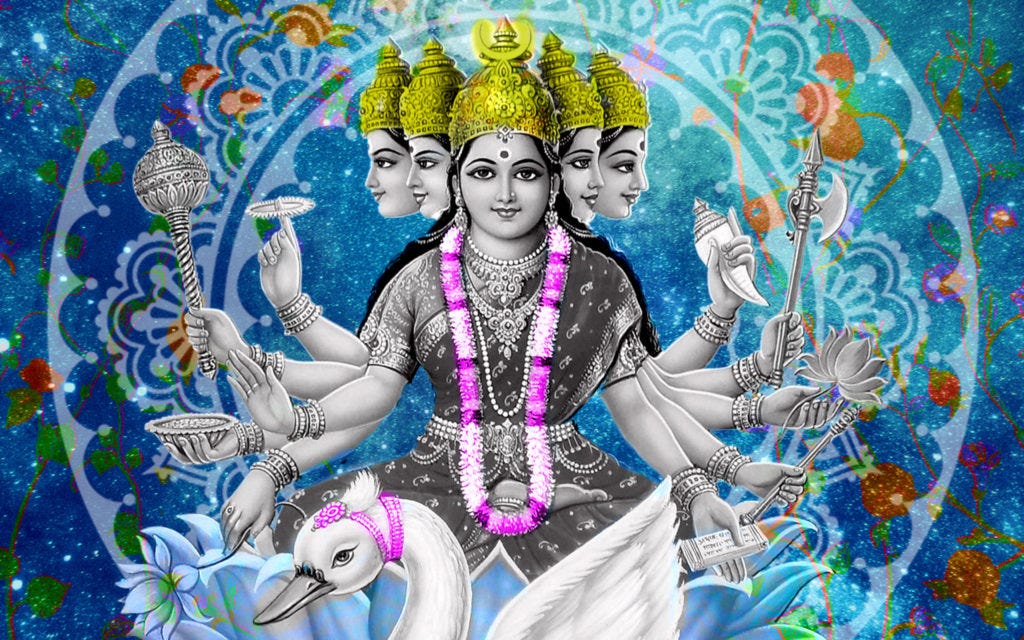
Images and text from Ekabhumi Charles Ellik. Previously published by Sounds True in The Bhakti Coloring Book (2018) and The Shakti Coloring Book (2015).
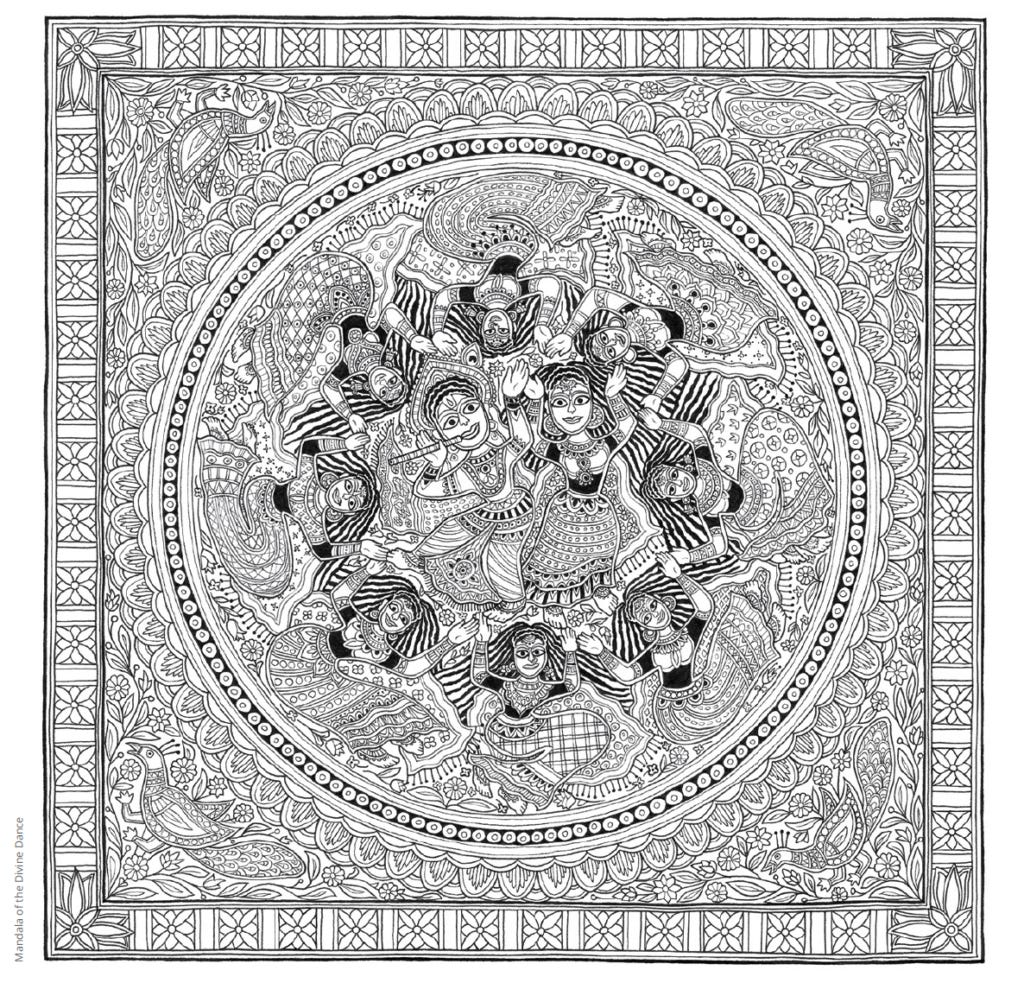
Mandala of the Divine Dance
Rādhā and Kṛṣṇa are depicted at the center of a joyous group of dancing milkmaids (gopis). The figures are portrayed in a circular dance, known as the rās-līlā, which means “sweet act” or “divine dance.” This celebrated event took place during a full-moon nights, when the milkmaids of Vrindavan snuck away from their households to the forest when they heard Kṛṣṇa playing his flute. There, they danced and engaged in love play throughout the night. Esoterically, this long “night” is the Night of Brahmā, which lasts approximately four billion years! It is a metaphor for the dance of life and for the romantic nature of Bhakti yoga, wherein a devotee falls in ecstatic spiritual love with the deity.
