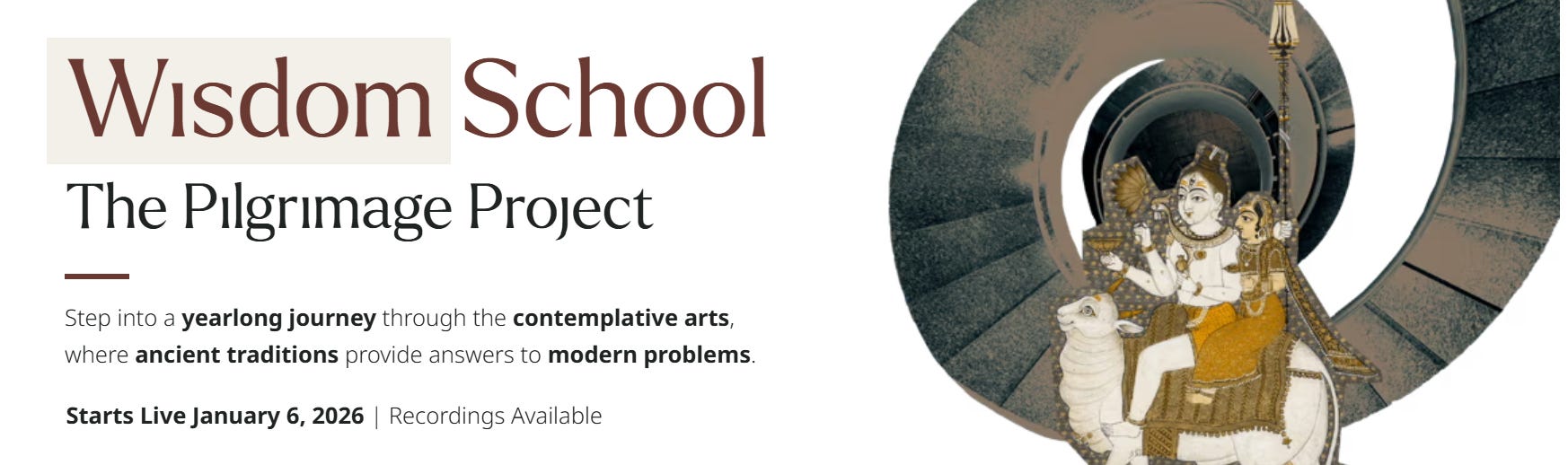
Athena Potari is a scholar and practitioner of Hellenic philosophy and contemplative traditions. Spending over seventeen years working with ancient philosophy as a lived, embodied practitioner, she has recently developed an academy for Hellenic Wisdom in Greece, devoted to the Goddess Athena. Embodied Philosophy is delighted to welcome her as one of our Core Faculty for Wisdom School 2026: The Pilgrimage Project, teaching the Hellenic Pathway. This article is taken from a recent Chitheads Podcast episode with Athena and Embodied Philosophy Founder and Teacher, Jacob Kyle.
Jacob:
So we're here to talk about the humanities. Could you talk about the original spirit of the humanities as you understand it and what its purpose was?
Athena:
So let’s start from the beginning. When we speak about the humanities, we’re referring to a Western project. So we need to go to the origins of the Western tradition, which is ancient Greece. The humanities originate in ancient Greece at a very interesting time, which we call the cross-section between pre-Socratic and Socratic philosophies.
The pre-Socratics were interested in the basic cosmological questions. What is the cosmos? What is the universe? Where do we come from? What is matter? What is consciousness? They were asking these very fundamental questions of existence: what it is to be aware, and what it is to be.
Modern scientific narratives sometimes depict these philosophers as early scientists, materialists, naturalists, or cosmologists, because they were observing nature and trying to understand how the elements work. But what we often forget is that the figures of pre-Socratic philosophy were mystics and priests. They received their teachings and their insights through mystical experiences—experiences of expanded consciousness.
“The figures of pre-Socratic philosophy were mystics and priests. They received their teachings and their insights during mystical experiences, experiences of expanded consciousness.”
Fast forward to the classical times of Athens, around the sixth and fifth centuries BCE, and the advent of Socrates, who, according to many, had also been initiated into the Eleusinian Mysteries. These mysteries carried forward a current that combined the pre-Socratic tradition with Pythagorean wisdom.
Socrates introduces what we call the anthropocentric turn. He turns his gaze from the direct study of the nature of consciousness and the hierarchies of being inward, toward the agora of ancient Athens. He asks: how can we now integrate all this great knowledge of cosmos and spirit into this place?
Socrates says, I want to work with my fellow Athenians—with the society and political system of the time. I want to study the human soul, the human condition, the way we function on the level of habit, inner self-knowledge, self-management, and ethics. I want to integrate all these aspects of human life into the greater paradigm that we have inherited as our cultural and spiritual tradition from the pre-Socratics.
It is at this point that we can locate the birth of the humanities. This is the moment when Socrates brings cosmological and spiritual knowledge into the study of the human being and into the development of a whole technology of becoming: how to become a flourishing human being, and at the same time, a healthy citizen.
The human being is understood as a microcosm, a direct image of the macrocosm of the universe. And this is where the humanities are born. Their mission is to ground esoteric teachings and rich spiritual knowledge—about consciousness, about the universe, about the origin of being—into our everyday lives as human beings and as citizens.
Jacob:
Wow. Athena. I’ve never heard you speak directly to this question before. It was illuminating to hear you unpack it in this way. What has happened today, that the humanities seem to have lost this original spirit?
Athena:
What is happening now is that we are facing the trickle-down effects of the materialist paradigm in science becoming the new status quo in the humanities. What we have inherited is basically the skeleton of the humanities—humanities that have lost the humus.
This is where the word humour comes from. It means the juices, the imagination, the inner contemplation, the poetry, the spirituality that has always been at the core—the soul—of the human search for meaning. And its loss is why I believe the humanities are suffering right now.
They are losing funding because who is interested in the human soul when we don’t believe there is a human soul? Who is interested in the human spirit when we don’t believe there is a human spirit?
“We have inherited the skeleton of the humanities that have lost the humus—the juices, the imagination, the inner contemplation, the poetry, and the spirituality that have always been at the core of the human search for meaning.”
Jacob:
Yes. One of the things that I’ve observed in the humanities that is absent is the question of the teleology of the human spirit, or even an interest in it, because it is considered irresponsible or “religious.” What has substituted that?
Athena:
Wow. That was beautifully put. Teleology is the key term here. What is the telos? What is the purpose of the humanities?
Aristotle would tell us that the original purpose—the telos—of human life should also be the purpose of the humanities. And that is eudaimonia. Why do we want to learn? Why do we want to study? In order to know ourselves.
By realizing the nature of our being, study becomes being, and being becomes knowing. By studying our being, by realizing the nature of who we are, we learn how to allow that nature—which is essentially divine, the God principle, the first principle, whatever we want to call it—to shine through every aspect of our human experience.
This leads us to fulfillment, to lasting happiness, to wholeness—what the Greeks called eudaimonia. This is the purpose of human life. This is the purpose of knowledge. This is the purpose of justice, of politics, and of the institutions of the state.
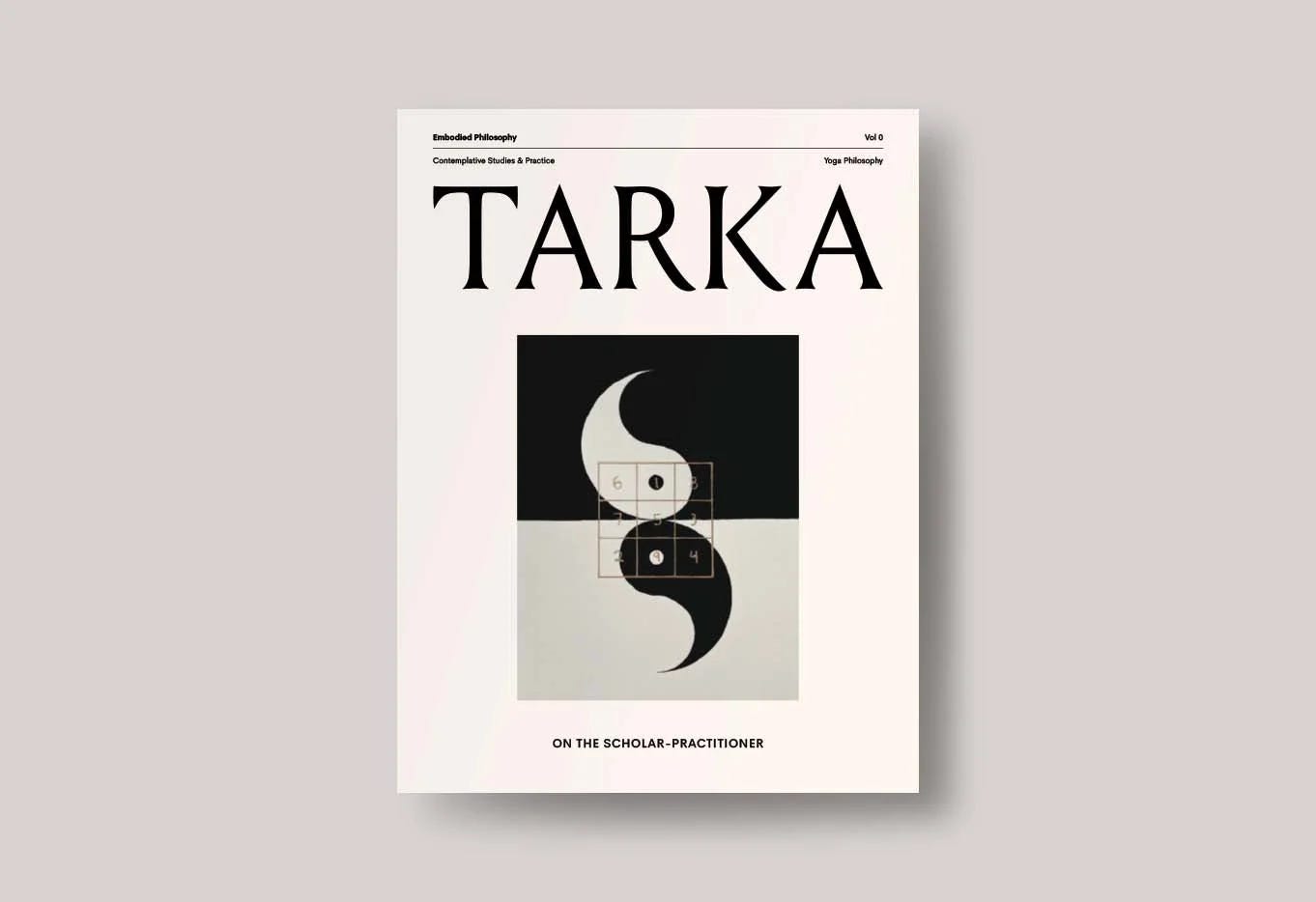
Explore the Print and/or Digital Issues of Tarka Journal in our online shop.
The point of all of this is to discover who we are, to realize the nature of being and the nature of consciousness, and through that realization to reconnect with our inherent authenticity and creativity. This allows the light of being—the light of Apollo—to shine forth through the human drama, so that we may live fulfilled, happy lives as healthy parts of a just whole.
So, fast forward to today. What is the purpose of knowledge now? To know ourselves? Nobody teaches us how to know ourselves in universities today. Nobody teaches that, because modern humanities begin from a fundamental assumption—which is just an idea, and one we should question—that we are only bodies.
We are matter. Matter is dead. And therefore we are these death-bags walking around, waiting for our time to dissolve back into non-existence. Oh my God—what a dark way of approaching who we are, and what life is. How much happiness can come out of that?
“[F]ast forward to today. What is the purpose of knowledge now? To know ourselves? Nobody teaches us how to know ourselves in universities today. Nobody teaches that, because modern humanities begin from a fundamental assumption… that we are just bodies.”
Jacob:
As you were speaking, I had this moment of really seeing how what we’ve been intuiting since we met is beginning to coalesce—at a time when the context feels especially primed for it. In this cultural moment where many universities are struggling, people are craving and thirsting for meaning: for an alternative path to cultivating knowledge.
Athena:
Yes. I see this very clearly in what you have been doing with Embodied Philosophy, which has been such an inspiration to me. I feel that this work has been laying the groundwork for a Wisdom School, or even a Wisdom University.
Through Wisdom School, we are beginning to create the universities of the future—working together with others to create spaces where knowledge can be approached in a way that is more harmonious with our spirit, with the nature of our being, and with our consciousness.
These are spaces devoted to what we truly seek: happiness, creativity, play, joy, exploration, and authenticity. This is where we are heading. This is the work we are here to do. And this is what we are beginning together with Wisdom School, starting this January.
Thank you for reading.
This interview is taken from a recent Chitheads Podcast Episode. Watch the full episode here.
Interested in entering into a relationship with the humanities as a living practice of enquiry through soul and spirit?
Join Athena and other teachers for Embodied Philosophy’s Wisdom School 2026: The Pilgrimage Project.